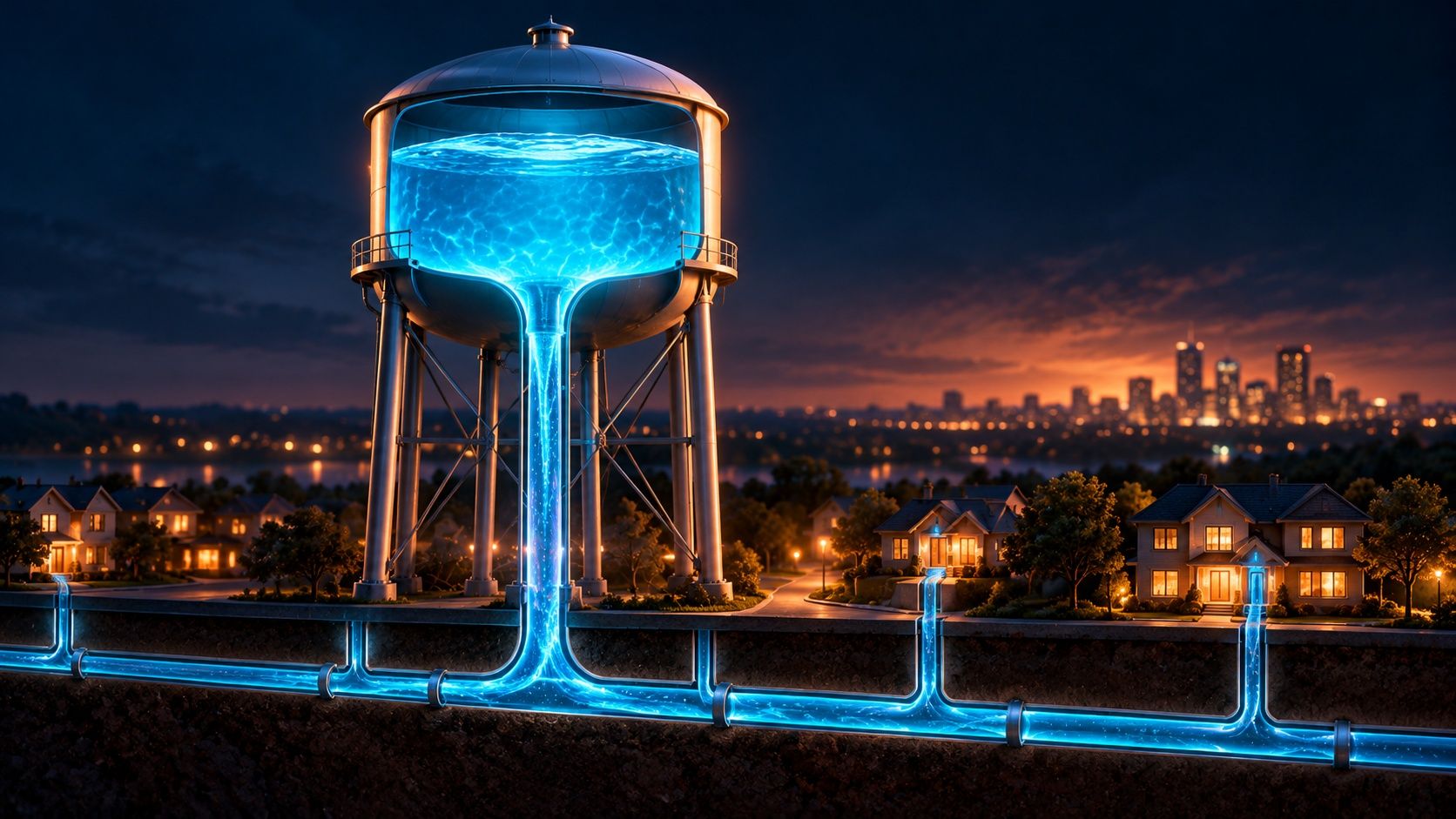
How do water towers work?
Pumps fill the tank high above the ground, often at night. Gravity then does the work: the weight of the water high up creates pressure that pushes water through the pipes and out of your tap, without any pump running.
Pumps lift water up to the tank
Pumps push treated water up into the tank, mostly at night when people use less water and electricity is cheaper. The tank then works as a store of water high above the town.
Share this stepHeight turns into pressure
Water is heavy. The higher the water stands, the harder it presses down on the water below. Every 10 meters (33 feet) of height adds about 1 bar of pressure, enough to push water up into a house.
Share this stepGravity pushes it to your tap
The pressure spreads through the underground pipes. Open a tap and water rushes out, pushed by the water standing in the tower. That’s why the tank must be higher than the buildings it serves.
Share this stepA water tower is a battery for water pressure.
Pumping upheightpressure in your tap
In the morning rush, when everyone showers at once, the tower covers the peak so the pumps don’t need to be huge. It also keeps water flowing for a while during a power cut and gives firefighters a reserve.
Common follow-up questions
Why are water towers so tall?
Height is pressure. The tank needs to be higher than the homes it supplies, so towers are often built on hills, where they can be shorter.
Do towns still build water towers?
Many do, but some newer systems use pumps that keep the pressure up directly. Towers are still popular because they are simple, reliable and store water.
What happens to my water in a power cut?
With a water tower, water keeps flowing for hours or longer, until the tank runs low. Systems that rely only on pumps can lose pressure faster.
Why is the water pressure weaker on the top floor?
Each floor is a few meters closer to the water level in the tower, so there’s less pressure left. Tall buildings use their own pumps to lift water higher.