How does a refrigerator work?
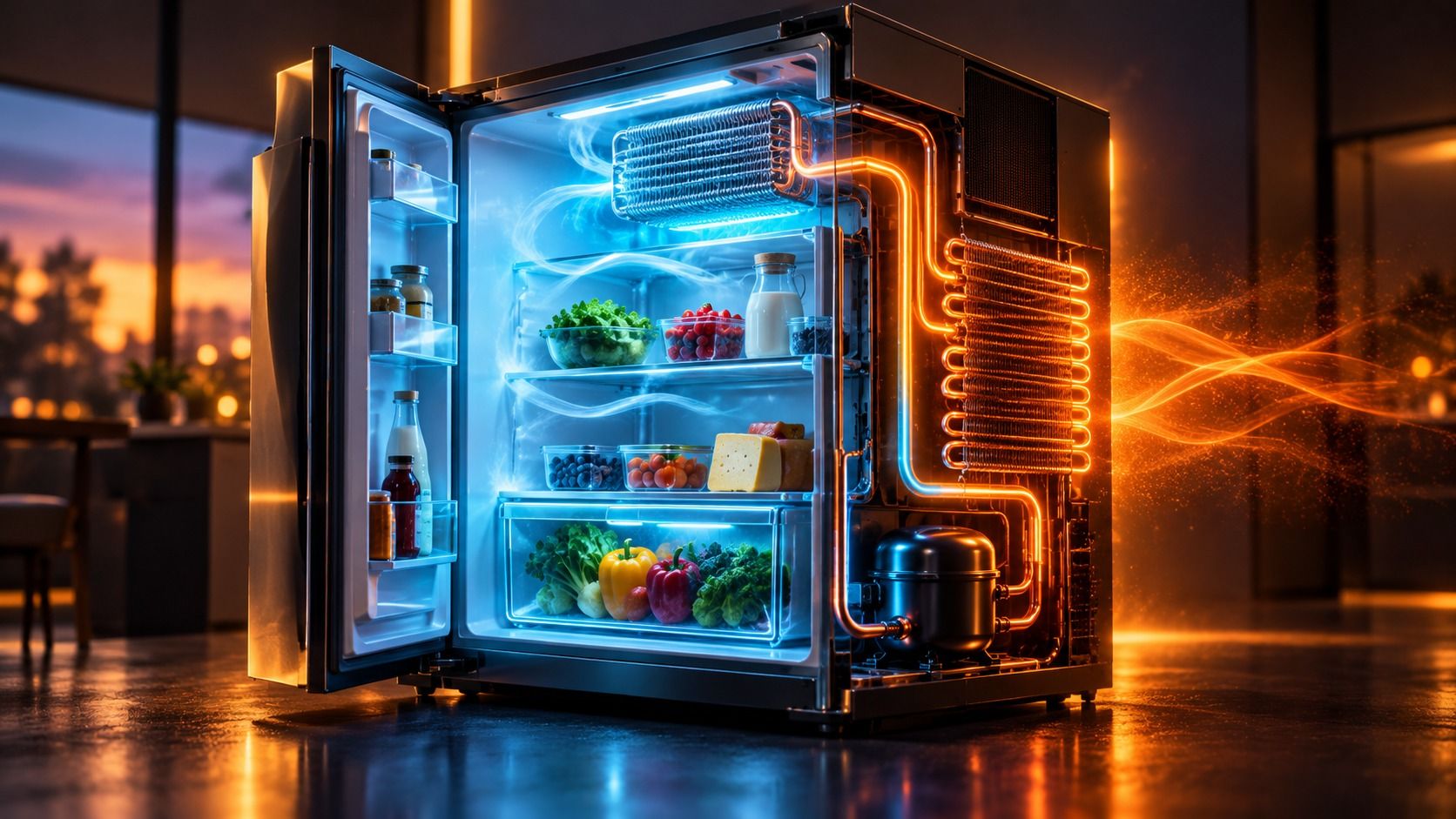
A refrigerator doesn’t make cold. It pumps heat out of the inside and releases it into your kitchen, using a liquid that absorbs heat as it turns into gas.
A liquid soaks up the heat inside
A special liquid called refrigerant flows through coils inside the fridge. It boils at a very low temperature, and as it turns into gas it absorbs heat from your food and the air around it.
Share this stepThe compressor squeezes the gas
The gas travels to the compressor at the bottom. Squeezing it makes it much hotter, hotter than your kitchen. That humming you hear now and then is the compressor at work.
Share this stepThe heat escapes out the back
The hot gas flows through coils on the back or sides of the fridge. Heat flows out into the room, the gas cools back into a liquid, and the loop starts again.
Share this stepA fridge moves heat, it doesn’t make cold.
Heat from insidecompressorwarm kitchen
That’s why the back feels warm, and why leaving the door open actually makes your kitchen warmer, not cooler.
Common follow-up questions
Why is the side or back of my fridge warm?
That’s the heat taken out of the fridge being released. It’s normal, and it’s why fridges need a little space around them to breathe.
Can I cool my kitchen by leaving the fridge open?
No. The fridge releases all the heat it removes, plus the heat from its own motor, into the same room. The kitchen ends up slightly warmer.
What temperature should a fridge be?
At or below 4 °C (40 °F). That slows the growth of bacteria that spoil food.
Should I let hot food cool before putting it in?
Let it cool for a short while, but don’t leave it out for more than about two hours. Divide large portions into smaller containers so they chill faster.