Why do fingers wrinkle in water?
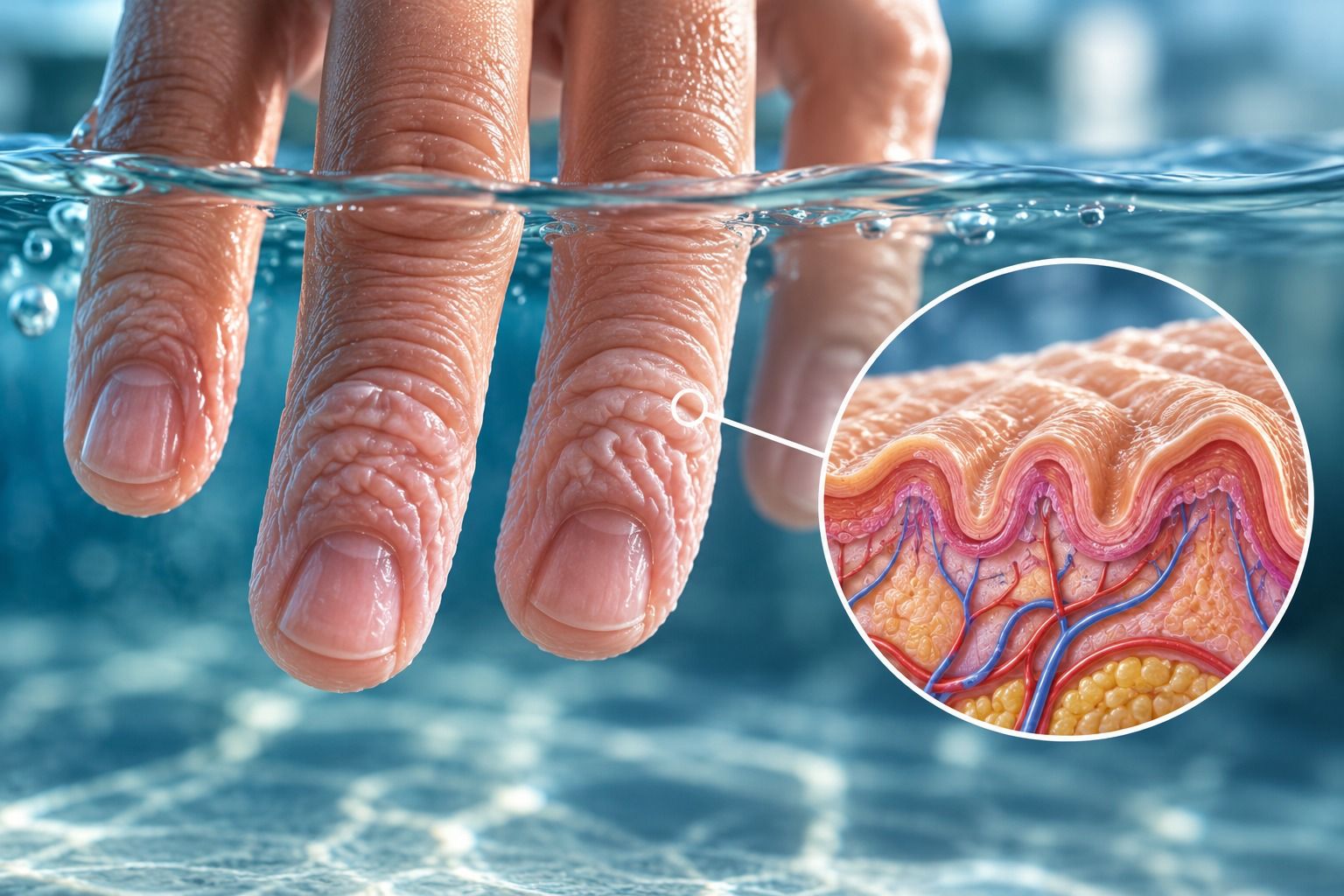
It isn’t your skin soaking up water. After a few minutes in water, your nervous system narrows the blood vessels in your fingertips, the soft tissue underneath shrinks a little and the skin on top folds into wrinkles.
Your nerves notice the water
After about five minutes in water, the thin outer layer of skin on your fingertips softens. Your nervous system picks up on this and sends an automatic signal.
Share this stepBlood vessels squeeze tight
The signal makes the tiny blood vessels under your fingertips narrow. With less blood flowing, the soft padding beneath the skin loses a little volume.
Share this stepThe skin folds into wrinkles
The outer skin stays the same size while the padding beneath it shrinks, so it buckles into ridges and channels, a bit like a tablecloth pushed together.
Share this stepWrinkly fingers are your body’s rain treads.
Waternarrow vesselswrinkles
Because nerves control it, scientists think it’s a feature: studies suggest wrinkled fingers grip wet objects better, the channels drain water like tire treads.
Common follow-up questions
How do we know nerves cause it?
People with nerve damage in a finger don’t get wrinkles in that finger. Doctors have even used the soak test to check nerve function.
Why only fingers and toes?
Fingertips and toes have dense networks of the nerves and blood vessels that control the reaction, and thick, grippy skin.
How long does it take?
Usually five to ten minutes, a little faster in warm water. The wrinkles go away within minutes once you dry off.
Is it harmful?
No. It’s a normal reflex. Wrinkling that happens without water, or fingers that turn white or blue in the cold, are worth mentioning to a doctor.