Why do we get goosebumps?
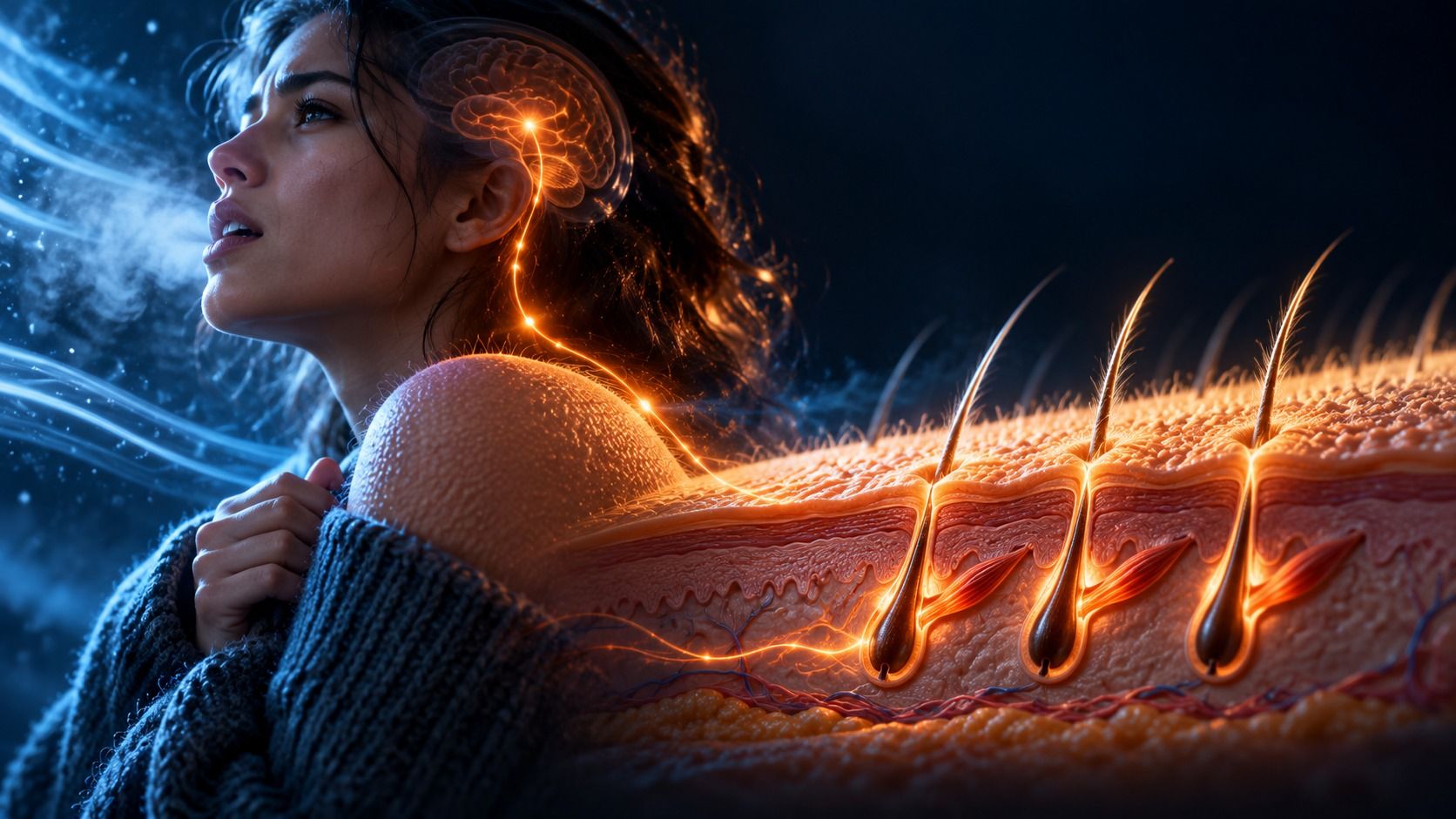
When you’re cold or feel a strong emotion, your nerves tell tiny muscles at the base of each hair to tighten. The hairs stand up and the skin around them bunches into bumps, a leftover from when our ancestors had thick fur.
Cold or a strong feeling
A chilly breeze is the classic trigger, but fear, awe or a favorite song can do it too. In both cases your body switches into a “get ready” mode run by the nervous system.
Share this stepYour nerves send an automatic signal
Your brain fires a signal through nerves you don’t control consciously, the same system behind a racing heart. It travels out to the skin all over your body.
Share this stepTiny muscles pull the hairs upright
Attached to each hair is a muscle smaller than a grain of sand. When it tightens, it tugs the hair upright and pulls the skin around it into a little bump.
Share this stepA reflex left over from our furry ancestors.
Cold or emotiontiny musclesgoosebumps
In furry animals, raised hair traps warm air and makes them look bigger to threats, think of a cat puffing up. We lost most of our fur, but kept the reflex.
Common follow-up questions
Why does music give me goosebumps?
Strong emotional moments in music activate the brain’s reward system and the same automatic nerves, triggering the reflex.
Do goosebumps actually keep us warm?
Barely. Human body hair is too thin to trap much air. The shivering that often comes along does far more.
Why are they called goosebumps?
The bumpy skin looks like a plucked goose, where the feathers used to be.
Can you get goosebumps on your face?
Rarely. They show up mostly where there are more and finer hairs, like arms, legs and the back of the neck.