How does VR work?
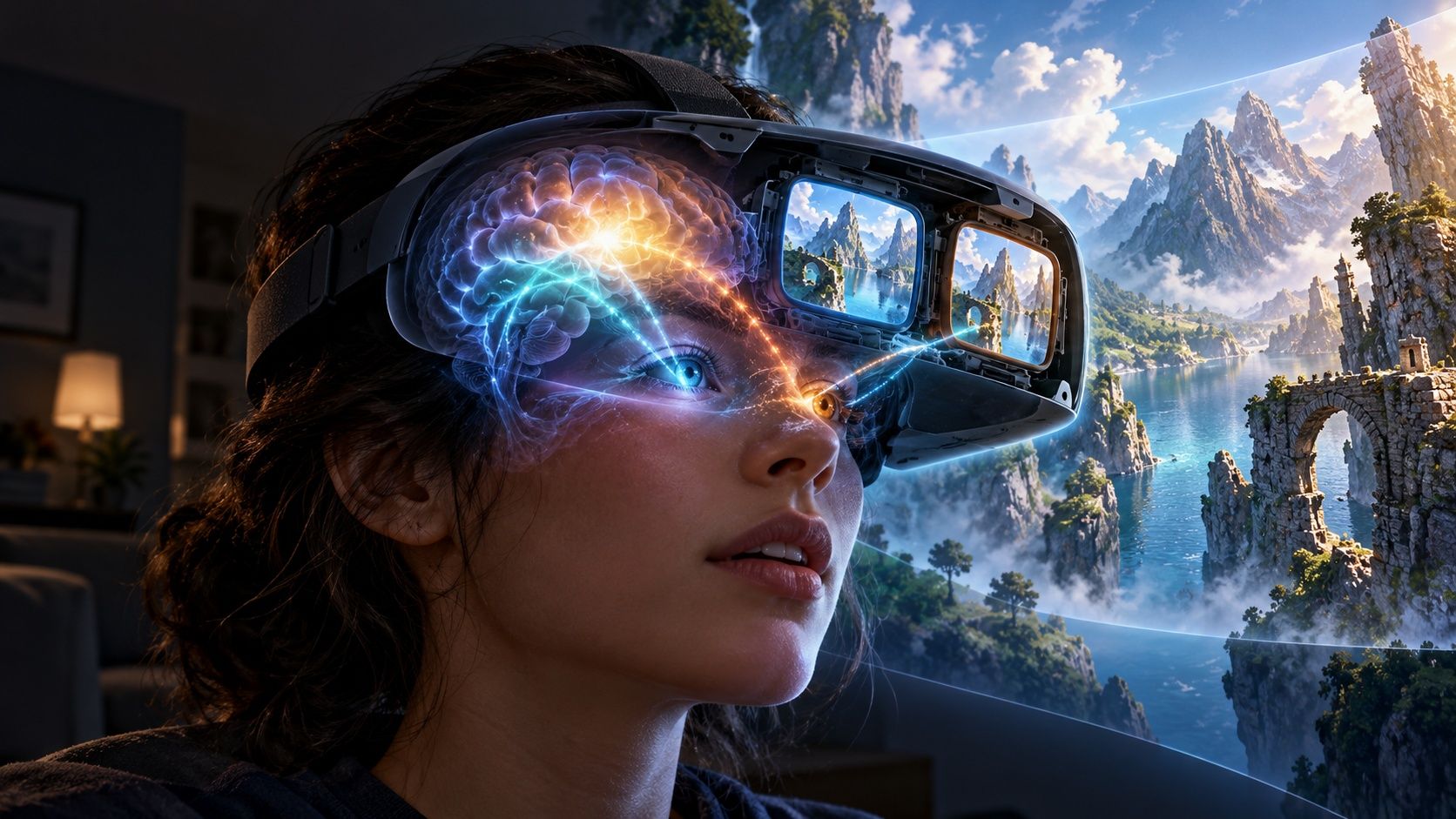
A VR headset shows each eye its own image, taken from a slightly different angle, just like your eyes see the real world. Lenses make the screens fill your view, and sensors track every head movement so the image follows you instantly. Your brain combines it all into a world that feels real.
One image for each eye
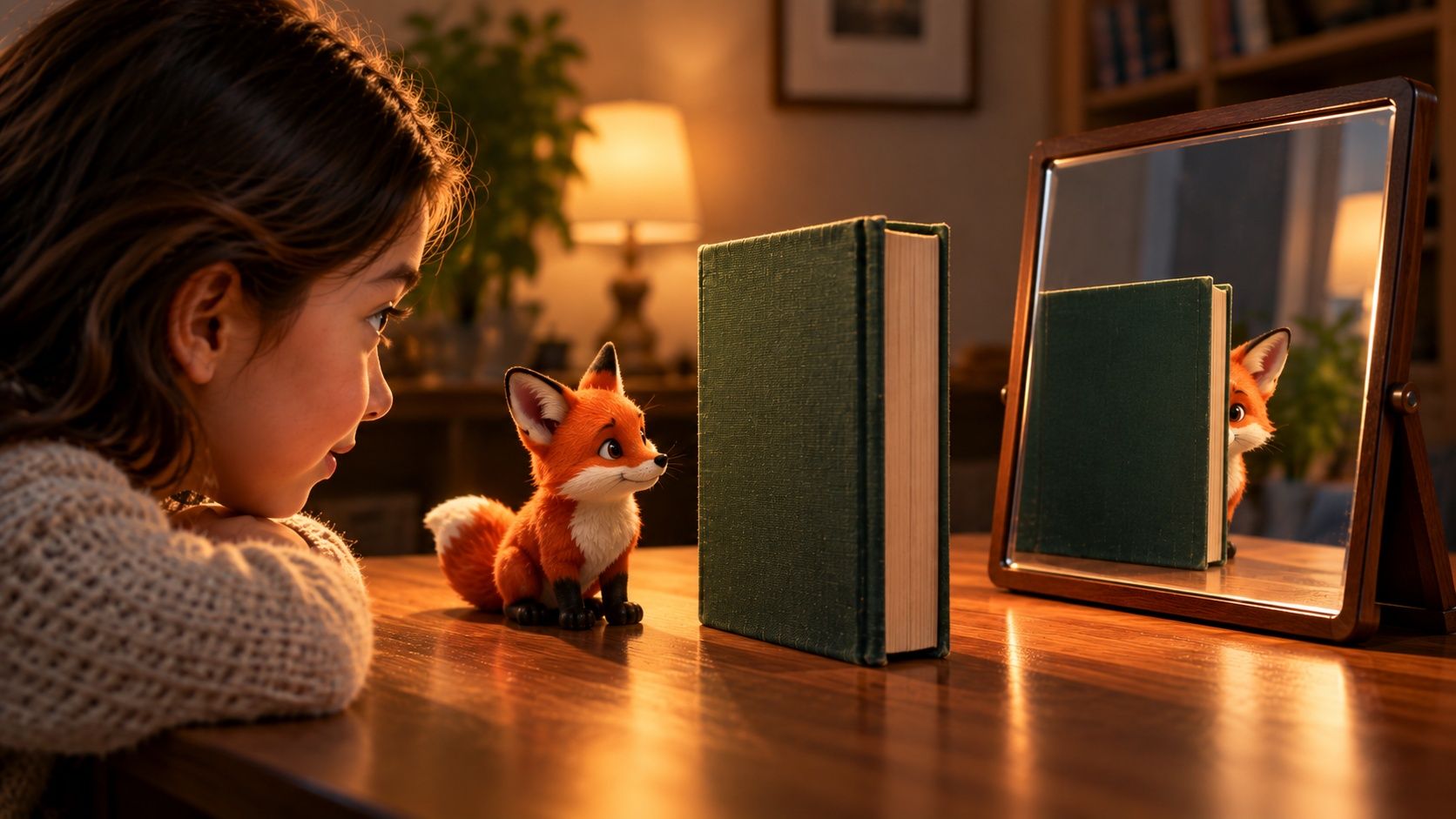
Inside the headset are two small screens, or one split in two. Each eye sees a slightly different picture, shifted the way your left and right eyes see the real world from a few centimeters apart.
Share this stepLenses fill your whole view
The screens sit just a few centimeters from your eyes. Lenses bend the light so your eyes can focus as if the image were far away, and stretch it to fill your field of view, hiding the room around you.
Share this stepYour brain builds the depth
Your brain compares the two images, just as it does every day, and turns the small differences into distance. Close things shift a lot between the eyes, far things barely at all. That’s why the world feels deep and solid.
Share this stepSensors follow every movement
Motion sensors and cameras track your head many hundreds of times a second. When you turn, the image updates within milliseconds, so the world stays still around you, like the real one.
Share this stepTwo flat images, one deep world.
Two screensyour brainvirtual world
If the image lags behind your head, or you move in VR while sitting still, your eyes and inner ear disagree. That mismatch is why VR can make some people feel sick.
Common follow-up questions
Why does VR make some people feel sick?
Your eyes say you’re moving while your inner ear feels you sitting still. The brain gets conflicting signals, much like car sickness. Short sessions and steady frame rates help.
Is VR bad for your eyes?
Studies haven’t found lasting damage in adults, but long sessions can cause tired eyes and headaches. Take breaks. Manufacturers set age limits for children, often around 10 to 13.
What’s the difference between VR and AR?
VR replaces your view with a virtual world. AR, augmented reality, adds digital objects on top of the real world you can still see.
Why do I need to adjust the lenses?
The distance between people’s eyes varies. Lining the lenses up with your pupils makes the image sharp and the depth feel right.