How does a QR code work?
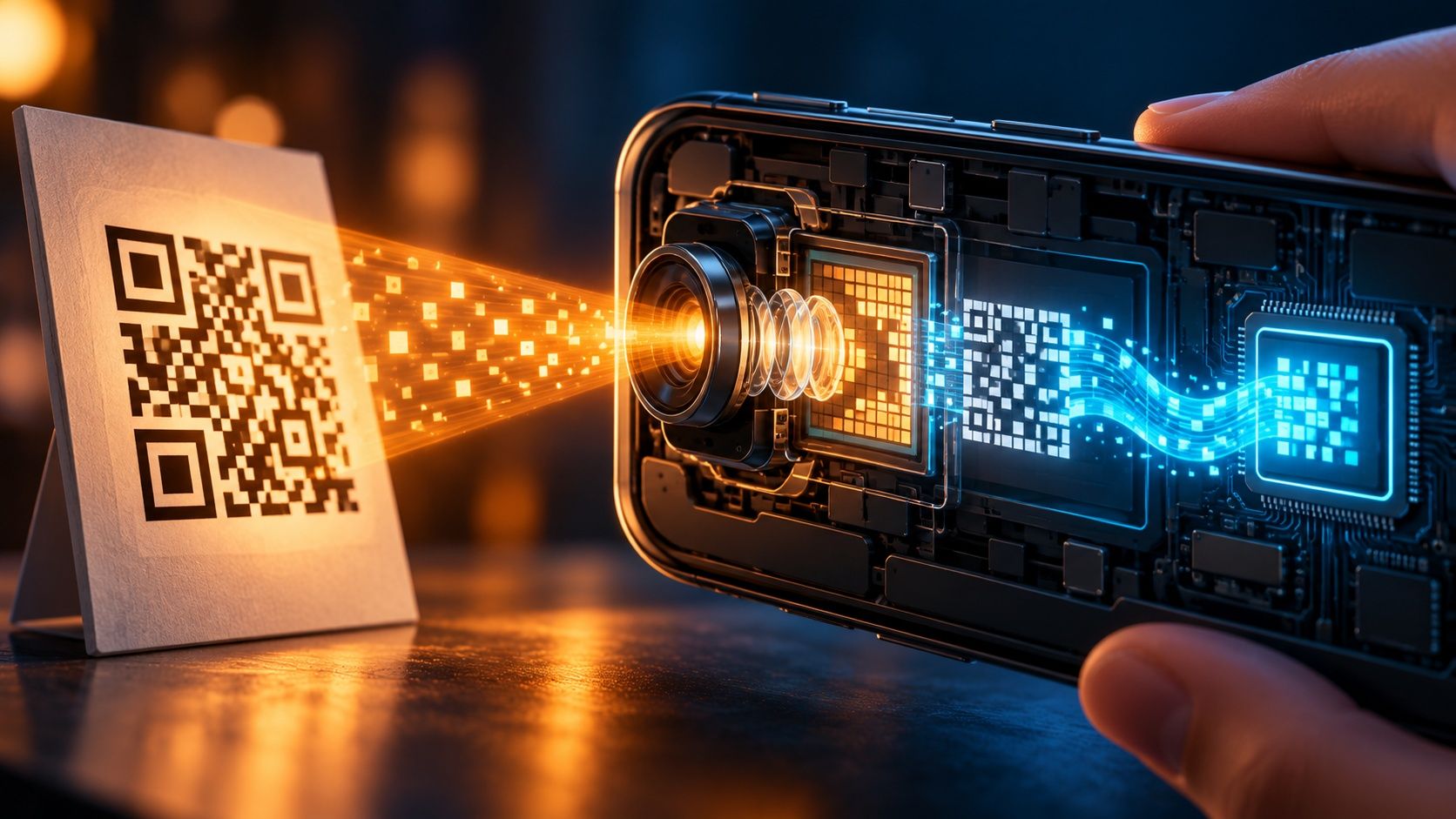
A QR code is a message written in black and white squares, like ones and zeros. Your phone’s camera photographs it, finds the three big corner squares to see which way the code is turned, and then reads the small squares as data. Usually the data is a web address, which the phone offers to open.
Three big squares show the way
The three large squares in the corners tell the phone where the code is and which way up it is. That’s why you can scan it at an angle, sideways or upside down.
Share this stepThe camera turns it into a grid
The camera takes a picture, and the software straightens it out and divides it into a grid. Each small square is read as either black or white, like a one or a zero.
Share this stepThe pattern becomes a message
The ones and zeros are translated into letters and numbers, often a web address. Part of the code is spare information, so even if up to about 30 percent is dirty or torn, it can still be read.
Share this stepA QR code is a link you can photograph.
Squaresones and zerosa message
QR codes were invented in 1994 by a Japanese company to keep track of car parts. ‘QR’ stands for Quick Response. The code itself does nothing on its own, it just holds text, so it’s the link it leads to that matters.
Common follow-up questions
Can a QR code be dangerous?
The code itself can’t harm your phone, but it can lead to a fake website. Check the address the phone shows before opening it, and be careful with codes stuck on top of others, for example on parking meters.
How much can a QR code hold?
Up to a few thousand characters, but the more it holds, the denser and harder to scan it gets. Most codes only hold a short web address.
Why can a QR code have a logo in the middle?
Thanks to the spare information. The logo covers part of the code, but the error correction fills in what’s missing.
Do QR codes expire?
A printed code never stops working. But some free QR services send the link via their own server, and if that service stops, the code leads nowhere.