How do fireflies light up?
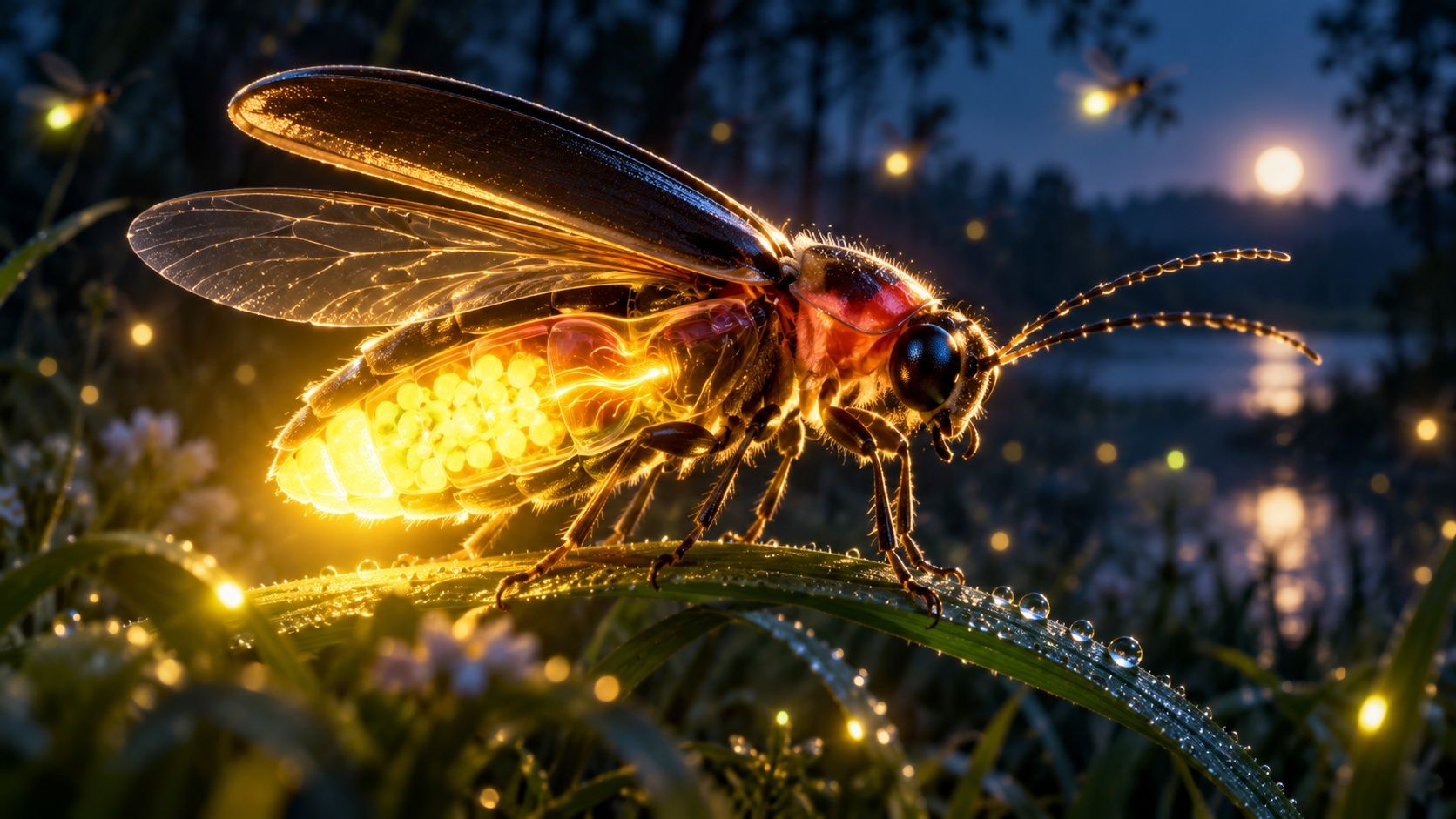
Fireflies make light with a chemical reaction in their tail. A substance called luciferin reacts with oxygen, helped by an enzyme called luciferase, and the energy comes out as light instead of heat. By controlling the air supply, the firefly switches the light on and off in its own flashing code.
A chemical reaction makes light
In the light organ at the end of its body, the firefly mixes luciferin with oxygen and an enzyme called luciferase. The reaction releases energy as light, almost without heat, which is why it’s called cold light.
Share this stepOxygen works as the on and off switch
The reaction only runs when oxygen gets in. The firefly controls tiny air tubes leading to the light organ, and by letting air in or blocking it, it can turn the light on and off in a fraction of a second.
Share this stepEach species has its own flash code
Fireflies use light to find a mate. Each species has its own rhythm of flashes, and a female answers a male of her own kind with a matching signal.
Share this stepLight without heat, made by chemistry.
Luciferinoxygencold light
Almost all the energy becomes light, far better than an old light bulb, which turned most of its energy into heat. The same reaction is used in labs to detect bacteria and track diseases.
Common follow-up questions
Are there fireflies in Europe?
Yes. The common glowworm is a relative. The wingless females glow steadily in the grass on summer nights to attract the flying males.
Why are fireflies disappearing?
Light pollution makes their signals hard to see, and loss of meadows, wetlands and pesticides affect their larvae.
Is the light hot?
No. It’s cold light, so the insect doesn’t burn itself.
Do other animals glow too?
Many do, especially in the deep sea: fish, jellyfish, squid and plankton. On land, some fungi and worms glow as well.