How can food be 3D printed?
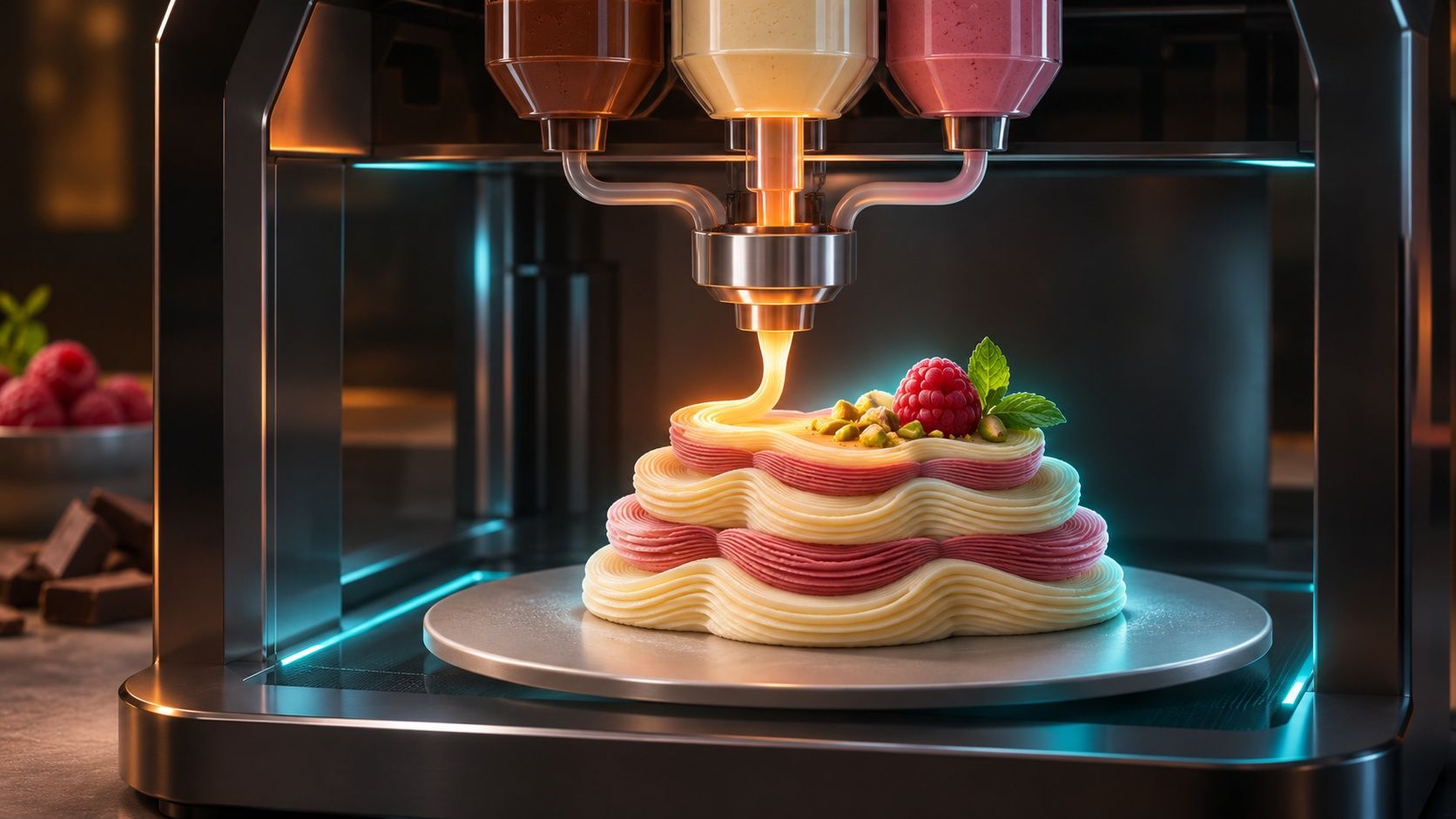
A food printer works like a precise piping bag controlled by a computer. It squeezes soft food, such as chocolate, dough or purée, through a thin nozzle and draws one thin layer at a time. Layer by layer, the shape grows until the dish is finished, exactly as designed on screen.
Food goes in as a paste
Ingredients are made soft enough to squeeze but firm enough to hold their shape, like chocolate, cream, dough, mashed vegetables or plant-based mixtures. They’re loaded into cartridges, one per ingredient.
Share this stepA nozzle draws each layer
A computer moves the nozzle along a path drawn from a 3D design, squeezing out a thin line of food, like icing a cake with perfect precision. Some printers heat or cool the nozzle so chocolate melts and sets just right.
Share this stepLayer upon layer builds the shape
When one layer is done, the nozzle rises a fraction of a millimeter and draws the next. Shapes that would be almost impossible by hand, like lattices and spirals, come out the same every time.
Share this stepA piping bag with a computer brain.
Soft foodprecise nozzlelayered dish
Food printing is used in fine dining and for chocolates today, and in some hospitals to make soft meals look like real food for people who have trouble chewing. Researchers are also testing printed plant-based meat.
Common follow-up questions
Is 3D printed food real food?
Yes. The printer only shapes the food, it doesn’t create it. A printed chocolate is ordinary chocolate in a new shape.
Does printed food need cooking?
Sometimes. Chocolate and cream are ready, while dough, pasta or meat alternatives are baked or cooked after printing.
Can I buy a food printer for home?
A few models exist, but they’re expensive and slow. Most food printing happens in restaurants, labs and food companies.
Is printed meat the same as lab-grown meat?
No. Printed meat is usually made from plant proteins shaped to look like meat. Lab-grown meat is grown from animal cells, and some companies combine the two.