Why do we get hiccups?
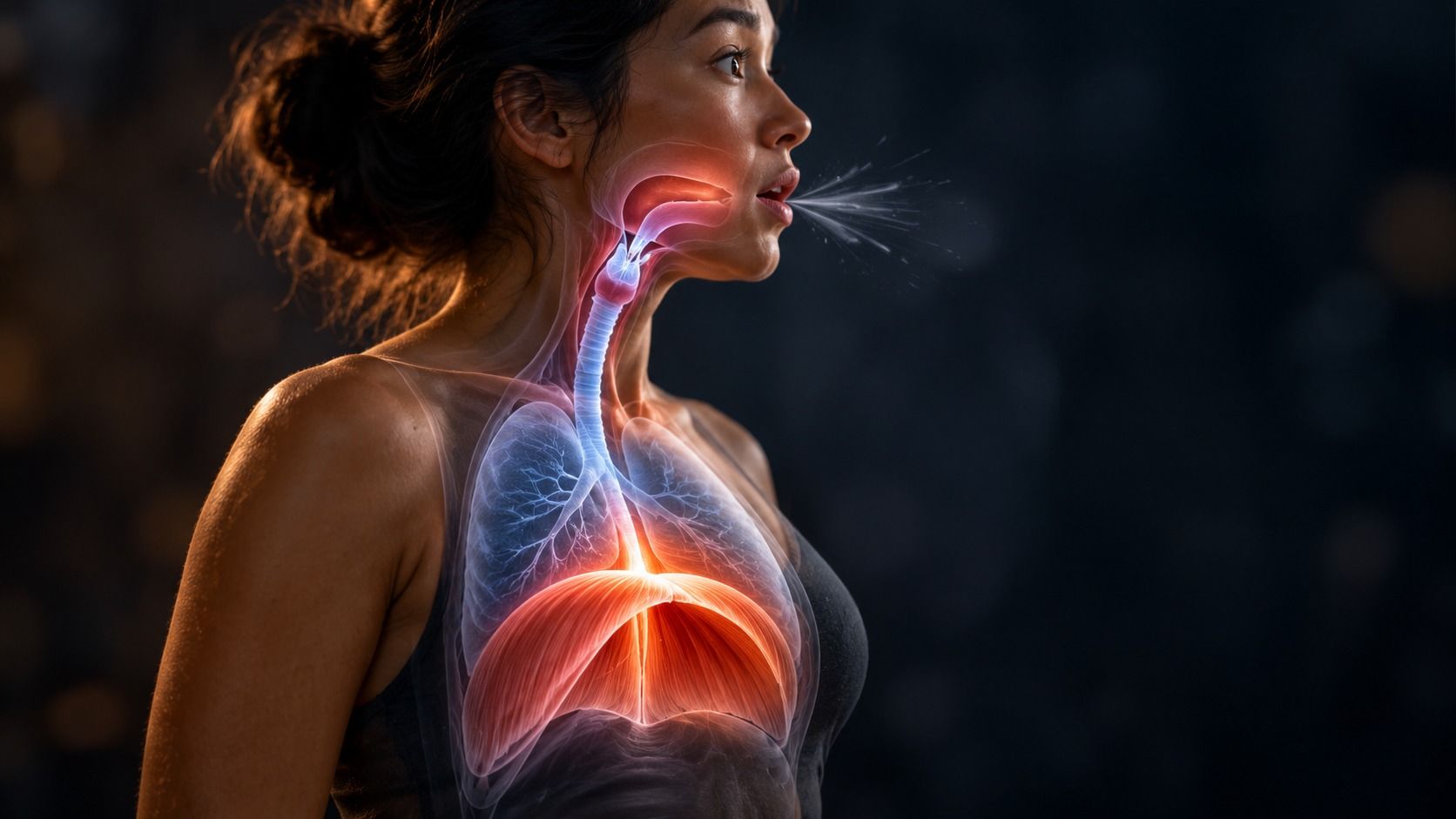
A hiccup is a sudden twitch of your diaphragm, the muscle under your lungs. It yanks in a quick breath, and a split second later your vocal cords snap shut, making the “hic” sound.
The breathing muscle twitches
Your diaphragm is the dome-shaped muscle under your lungs that does most of your breathing. Sometimes it gets irritated, for example by eating fast, a full stomach or fizzy drinks, and it suddenly contracts.
Share this stepAir rushes in
The twitch pulls the diaphragm down hard, so air is suddenly sucked into your lungs, a sharp, involuntary gasp you can’t stop.
Share this stepThe vocal cords slam shut
About a tenth of a second later, your vocal cords snap closed and block the incoming air. That sudden stop is what makes the “hic” sound.
Share this stepA tiny glitch in your breathing reflex.
Twitchsudden breathhic!
Hiccups usually stop on their own within minutes. Holding your breath or sipping cold water may help by resetting the breathing rhythm, though no trick works every time.
Common follow-up questions
What’s the best way to stop hiccups?
Holding your breath, sipping ice-cold water or swallowing a spoonful of sugar can help by interrupting the reflex. They don’t always work, but hiccups usually pass on their own.
Why do babies get hiccups so often?
Their breathing reflexes are still developing, and feeding and swallowing air can easily set off the diaphragm. It’s normal and doesn’t bother most babies.
Does scaring someone really cure hiccups?
Sometimes. A sudden shock can disrupt the reflex, but there’s no proof it works better than holding your breath.
When should I see a doctor?
If hiccups last more than 48 hours, keep coming back or make it hard to eat, sleep or breathe.