Why do we dream?
Nobody knows for sure, but the leading idea is that dreams are a side effect of your brain sorting memories and emotions while you sleep. Most vivid dreams happen in REM sleep, when the brain is almost as active as when you’re awake.
Your brain wakes up while you sleep
Several times a night you enter REM sleep, named after the rapid eye movements. Your brain becomes almost as active as when you’re awake, and that’s when most vivid dreams happen.
Share this stepMemories and feelings get replayed
The brain seems to replay and sort what happened during the day, linking new memories to old ones and processing emotions. Dreams may be what that sorting feels like from the inside.
Share this stepWhy dreams are so strange
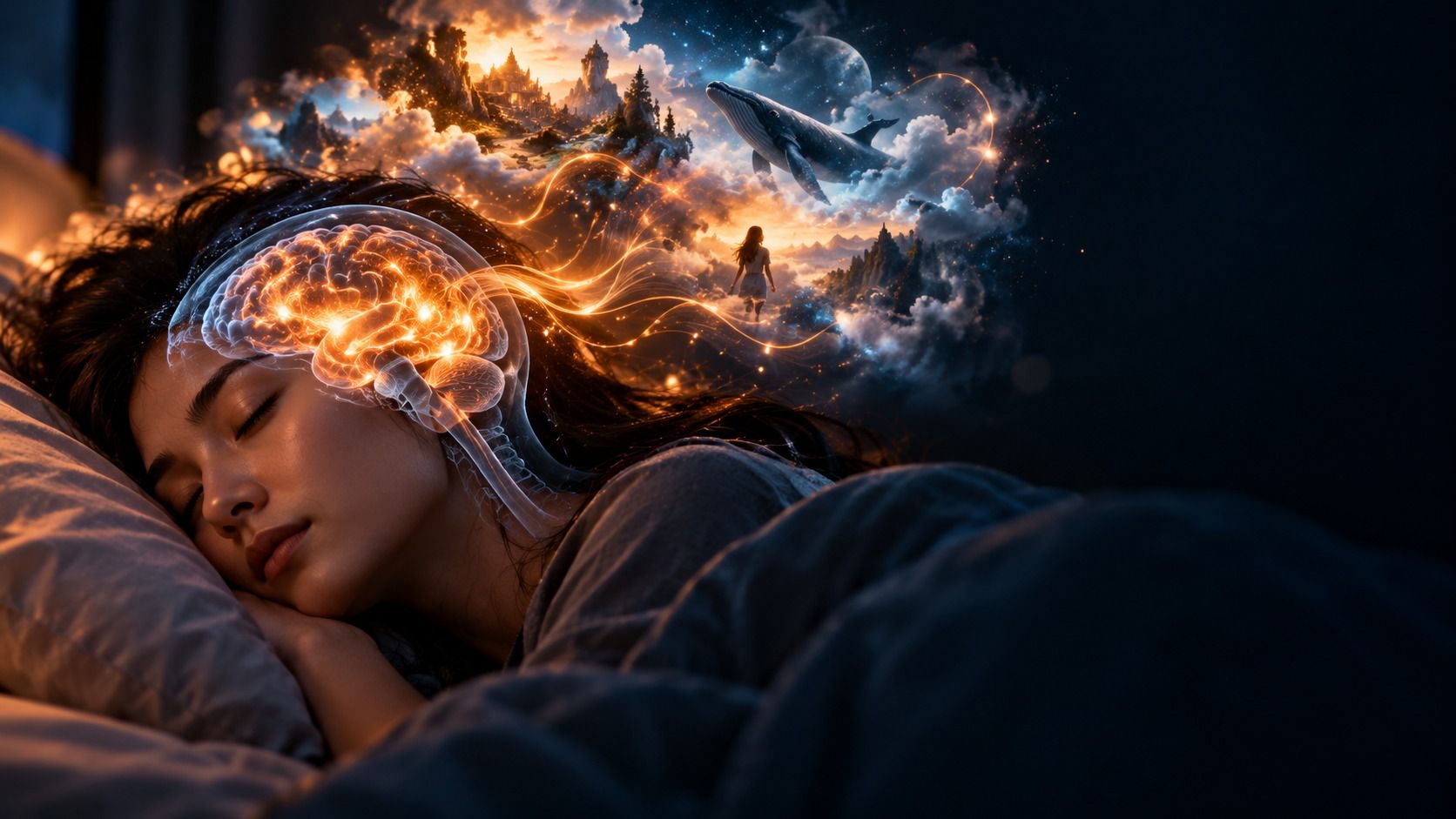
The parts of the brain that handle logic and time are quieter during REM, while emotion and imagery are busy. So the brain weaves fragments into stories that feel real, even when whales fly.
Share this stepYour body is switched off
During REM sleep your brain blocks signals to most of your muscles, so you don’t act out your dreams. That’s why you sometimes wake up feeling briefly unable to move.
Share this stepDreams are your brain doing housekeeping.
Memoriesemotionsdreams
Scientists still debate exactly why we dream, but sleep and REM clearly matter for memory and mood. Everyone dreams, every night, even if you forget most of it within minutes of waking.
Common follow-up questions
Why do I forget my dreams so fast?
The brain chemistry that helps store memories is low during REM sleep. Unless you wake up during or right after a dream and think about it, it fades within minutes.
Do dreams mean anything?
They often reflect what’s on your mind, like worries, recent events and strong emotions. But there’s no scientific support for hidden symbols with fixed meanings.
Why do we have nightmares?
Stress, anxiety, poor sleep and some medications make nightmares more likely. Frequent nightmares that disturb your sleep are worth talking to a doctor about.
Do animals dream?
Many mammals and birds have REM sleep, and studies suggest some replay their day while sleeping. Your twitching dog may well be dreaming.