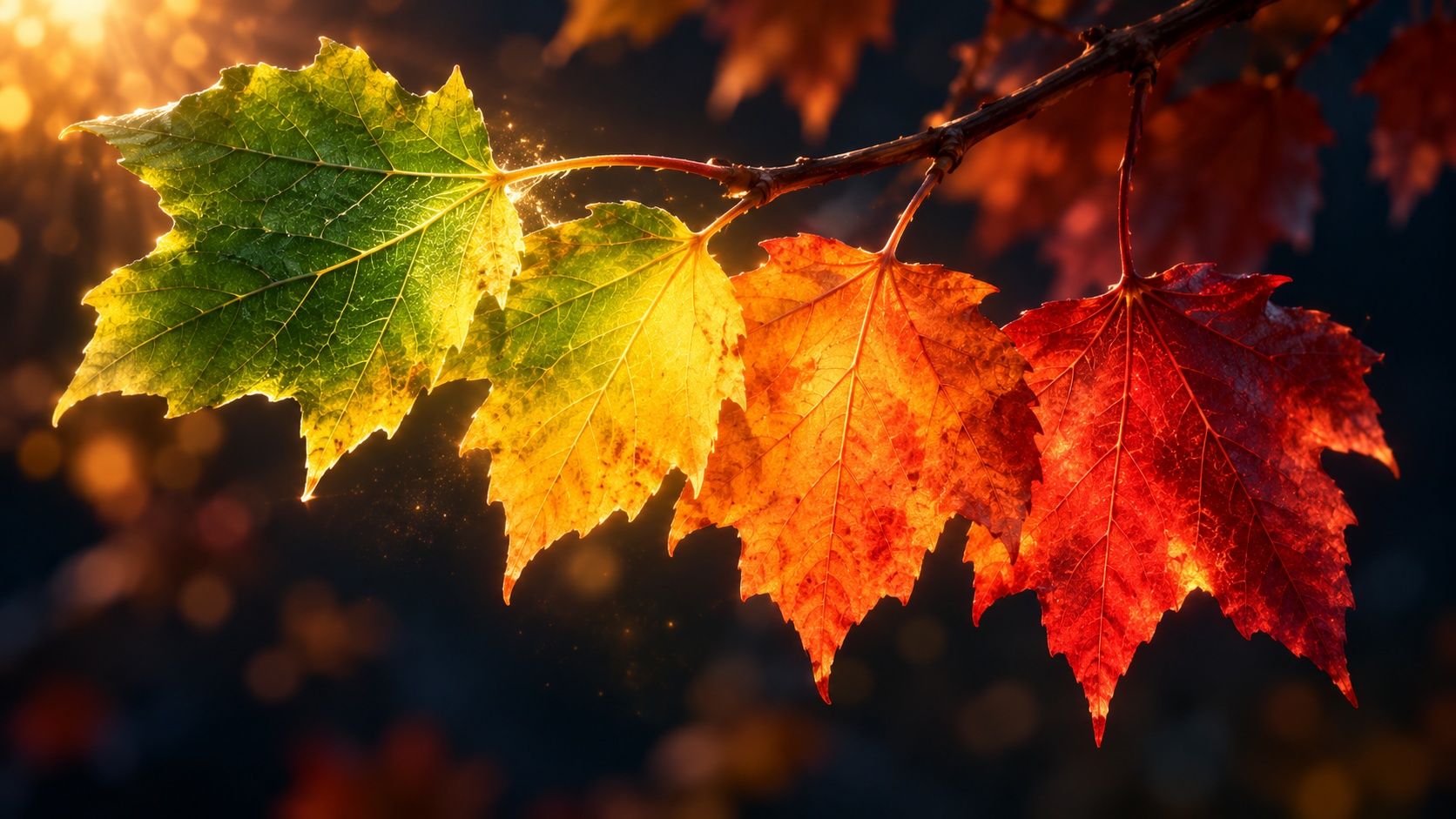
Why do leaves change color in the fall?
As days get shorter, trees stop making chlorophyll, the green pigment that hides the yellow and orange colors already in the leaf. Some trees also make new red pigments. Then the tree seals off the leaf so it can fall.
Green is a summer job
All summer, leaves are packed with chlorophyll, the green pigment that turns sunlight into food for the tree. It breaks down constantly, and the tree keeps replacing it.
Share this stepRed is made fresh in the fall
Red and purple are different. Some trees, like maples, make new red pigments in autumn from sugar trapped in the leaf. They may work like sunscreen while the tree pulls nutrients back.
Share this stepThe tree seals off the leaf
A layer of cells forms where the stem meets the branch. It cuts off the leaf’s water supply and seals the wound, so the leaf can drop without the tree losing water over the winter.
Share this stepFall reveals colors that hid all summer.
Shorter daysless greenfall colors
The brightest reds come after sunny days and cool, but not freezing, nights. That’s why some autumns are far more colorful than others.
Common follow-up questions
Why do some trees turn red and others yellow?
It depends on the species. Birches and aspens mostly turn yellow, because they make little red pigment. Many maples and rowans make a lot, so they turn orange and red.
Is it the cold that changes the color?
Mainly it’s the shorter days. Temperature and weather affect how bright the colors get and how long they last.
Why do evergreen needles stay green?
Needles have a waxy coating and tough structure that survives winter, so the tree keeps them for several years and replaces them a few at a time.
Why do trees drop their leaves?
Broad leaves lose a lot of water and would be damaged by frost. Dropping them saves water and energy until spring.