How does AI generate videos?
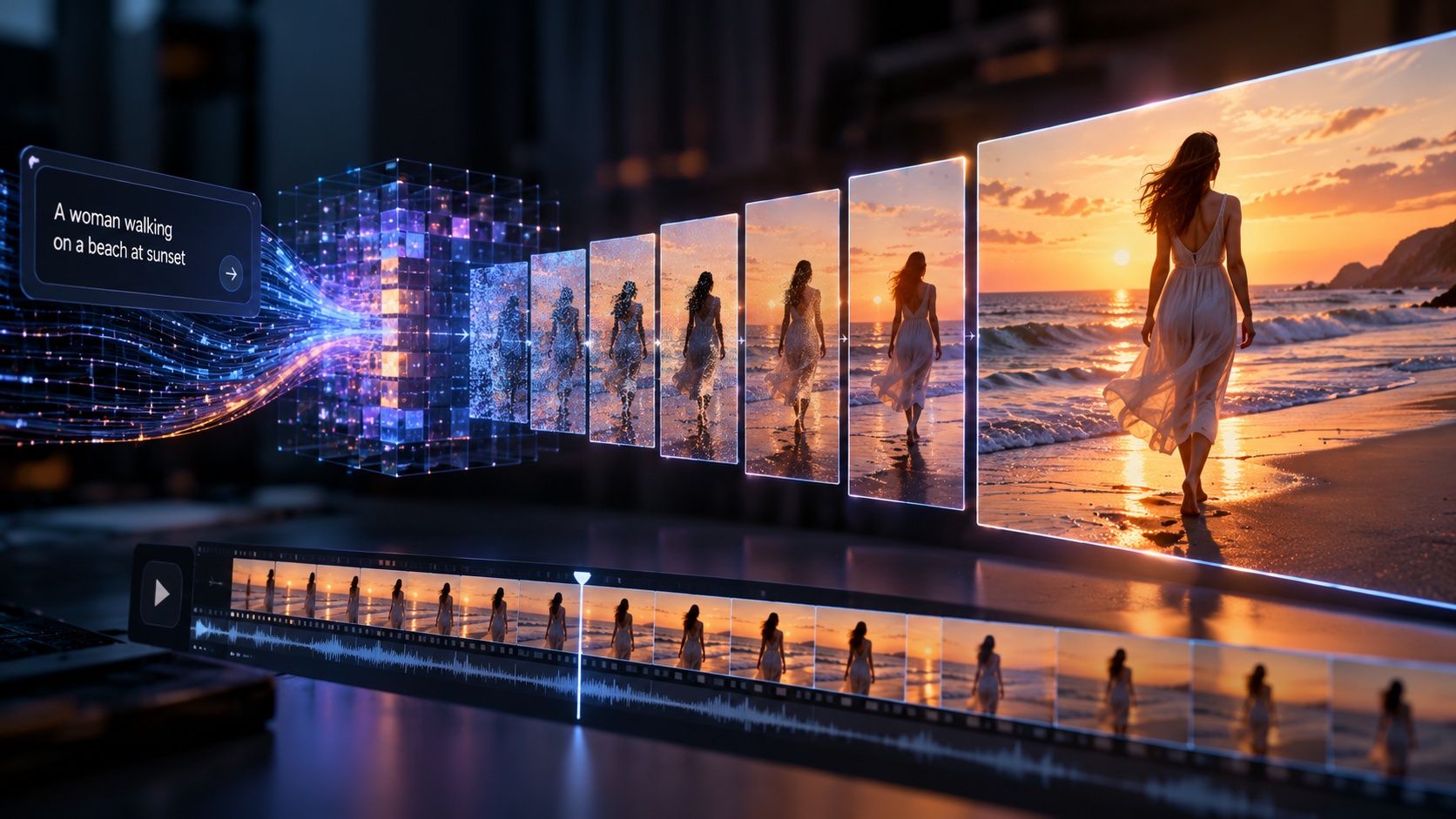
Most AI video tools start from pure noise, like TV static, and remove it step by step until a video appears. A model trained on huge amounts of video learns what the noise should turn into, guided by your text prompt. It works on all frames at once, so people and objects stay consistent as they move.
Your words become a guide
The text you type is turned into numbers that capture its meaning: a woman, a beach, sunset, walking. This becomes the guide the model follows throughout the process.
Share this stepIt starts with pure static
The video begins as random noise, a block of static covering every frame. During training the model saw millions of videos with noise added, and learned how to remove it again.
Share this stepNoise is removed, step by step
In dozens of small steps the model guesses what’s hidden in the noise and removes a little of it each time, steered by your prompt. Shapes appear first, then colors, then fine details like waves and hair.
Share this stepAll frames are made together
Unlike a series of separate images, the model works on the whole clip at once and has learned how things move. That keeps the woman, her dress and the light consistent from frame to frame.
Share this stepFrom static to scene, one step at a time.
Noiseyour promptvideo
It takes enormous computing power, which is why most tools only make short clips. Mistakes such as extra fingers or objects that merge happen because the model predicts what looks likely, it doesn’t understand the physical world.
Common follow-up questions
How can you tell if a video is AI-generated?
Look for odd hands, text that doesn’t make sense, objects that change or merge, and unnatural physics. Some tools add hidden watermarks, but detection isn’t always reliable.
Why are AI videos so short?
Every extra second multiplies the computing needed, and keeping things consistent over long clips is still hard.
Where does AI learn from?
From large collections of videos and images paired with descriptions. Which material may be used for training is a debated legal question.
Can AI make video with sound?
Yes, some newer models generate sound and speech together with the picture, matched to what happens in the video.