How do fish drink?
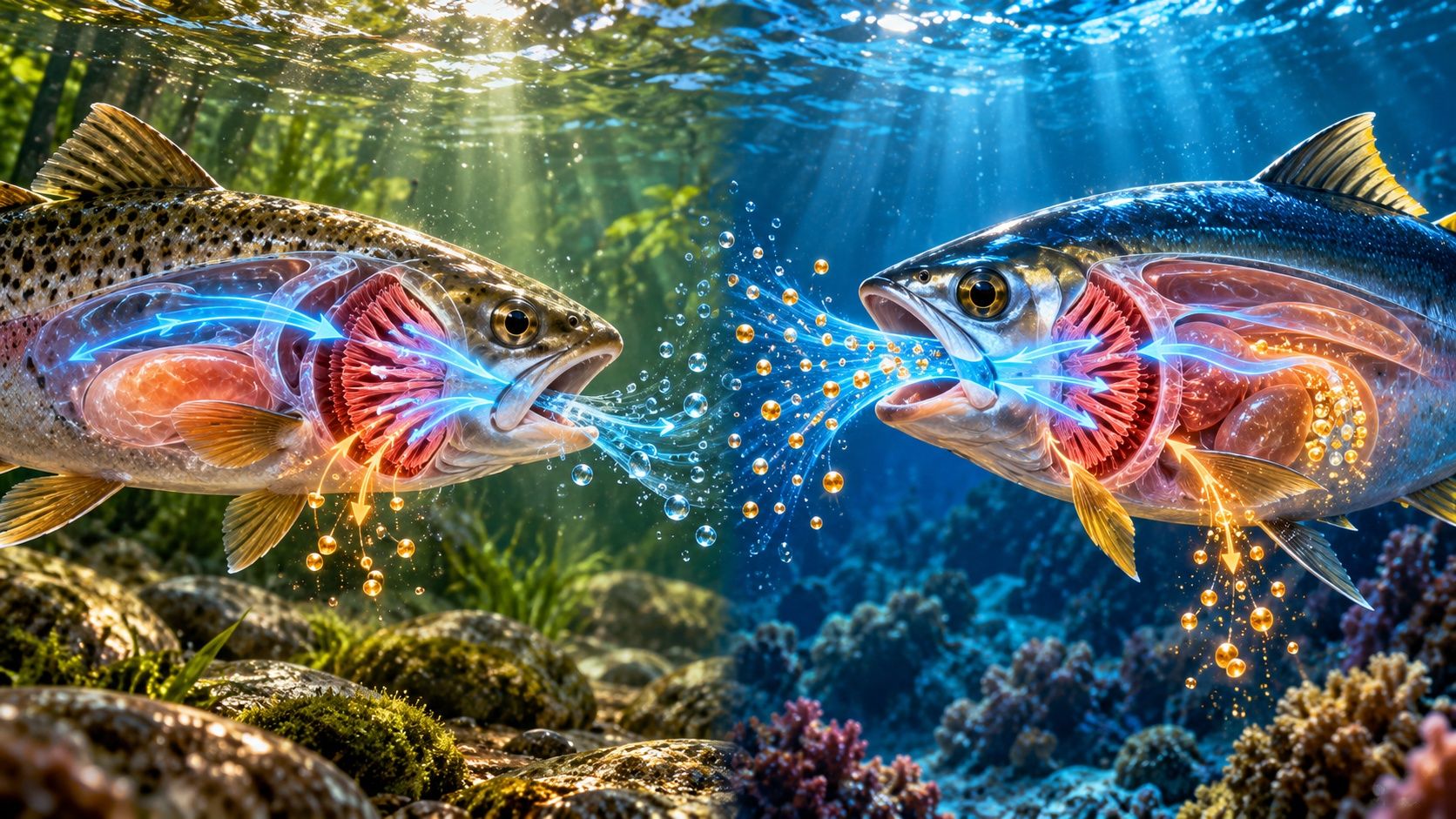
It depends on where they live. Freshwater fish almost never drink, because water constantly seeps into their bodies, so instead they pee a lot. Saltwater fish lose water to the salty sea, so they drink seawater all the time and pump out the extra salt through their gills.
Water moves toward the saltier side
Water naturally flows through thin membranes toward where there’s more salt, a process called osmosis. A fish’s body is a little salty inside, so it either gains or loses water depending on the water it swims in.
Share this stepFreshwater fish don’t need to drink
In lakes and rivers the water is less salty than the fish, so water seeps in through the gills and skin all the time. The fish hardly drinks at all. Instead its kidneys get rid of large amounts of very watery urine, while the gills hold on to salt.
Share this stepSaltwater fish drink all the time
In the sea the water is saltier than the fish, so it keeps losing water and would dry out. It drinks seawater constantly, and special cells in its gills pump the extra salt back out into the sea.
Share this stepFreshwater fish pee, saltwater fish drink.
Water in or outsalt balancea healthy fish
Salmon and eels move between rivers and the sea and can switch their whole system around, which takes a few days. Most other fish would die if moved from fresh to salt water or the other way.
Common follow-up questions
Do fish get thirsty?
Probably not the way we do. Their drinking is controlled automatically by their body to keep the salt balance right.
Why can’t freshwater fish live in the sea?
Their bodies are built to hold on to salt and get rid of water. In the sea they would lose water fast and couldn’t remove the extra salt.
How do fish breathe?
Water passes through the gills, where thin folds full of blood take up oxygen dissolved in the water.
Do sharks drink seawater?
Hardly at all. Sharks keep a chemical called urea in their blood, which makes their body about as salty as the sea, so water doesn’t flow in or out much.